
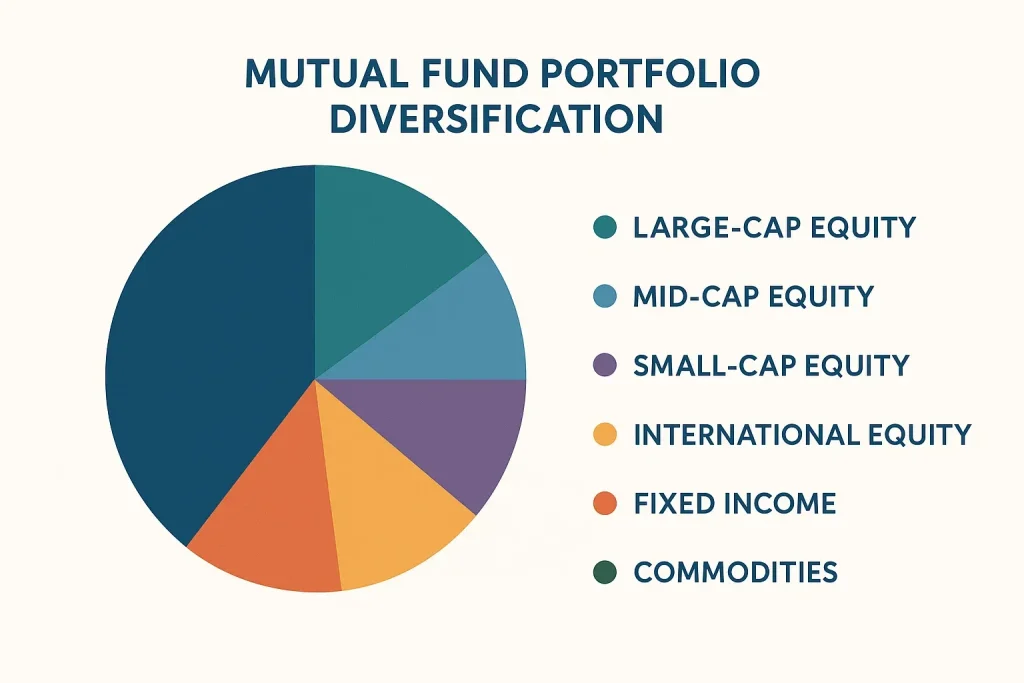
What Is Portfolio Diversification in Mutual Funds?
In simple terms, portfolio diversification means spreading your investments across different asset classes, sectors, and regions to reduce risk. In the context of mutual funds, it involves investing in a mix of funds, each with its own strategy and focus, so that the overall risk is lower while potentially offering more stable returns.
For example, instead of investing in a single mutual fund that focuses solely on technology stocks, you might diversify by including a bond fund, an equity fund, and perhaps a hybrid fund in your portfolio. This way, if one area of the market suffers, others may still perform well, balancing out your overall returns.
Why Is Portfolio Diversification Important?
Think of diversification as a safety net. Here’s why it’s so important in mutual fund investing:
1. Minimizes Risk
The main goal of diversification is to reduce risk. If one asset or sector performs poorly, other investments in your portfolio can cushion the blow. For example, when stock markets go down, bond funds often hold their value better, so a well-diversified portfolio can help you ride out market volatility.
2. Takes Advantage of Market Opportunities
The market is always evolving. By having a diversified portfolio, you increase your chances of benefiting from various market trends, whether it’s growth in tech, real estate, or emerging markets. It’s about giving yourself exposure to different opportunities.
How to Diversify Your Mutual Fund Portfolio
Now that we know why diversification is important, let’s look at some practical ways to build a diversified mutual fund portfolio:
1. Mix Asset Classes (Equity, Debt, Hybrid)
Different asset classes behave differently in the market. For instance:
- Equity Funds (stocks): These offer higher potential returns but come with more risk and volatility. Ideal for long-term goals.
- Debt Funds (bonds): These are more stable and provide regular income, but typically offer lower returns than equity funds.
- Hybrid Funds: These combine both equities and debts to give a balanced exposure to risk and reward.
- You can start by selecting a few equity funds for growth, add some debt funds for stability, and possibly choose hybrid funds for balance.
2. Invest in Different Sectors
Different industries perform differently based on economic conditions. For example, technology stocks might boom while real estate or banking sectors lag behind. By diversifying across sectors, you can spread risk. Some sectors to consider diversifying into:
- Technology
- Healthcare
- Financials
- Consumer Goods
- Energy
3. Geographical Diversification
Think global! While investing in Indian markets is important, international mutual funds can give you exposure to global growth opportunities. By investing in funds that focus on U.S. stocks, European companies, or emerging markets, you can reduce the risk of being overly dependent on one country’s economy.
A Sample Diversified Portfolio
Here’s a simple example of what a diversified mutual fund portfolio could look like:
- 40% in Large-Cap Equity Funds (for stable long-term growth)
- 30% in Debt Funds (for safety and regular income)
- 20% in Sectoral Funds (e.g., technology or healthcare for higher growth)
- 10% in International Funds (to capture global opportunities)
This allocation can be adjusted depending on your individual goals, age, and risk tolerance.