
SKB Capital

Mutual Fund Risk Assessment

You are considering the Mutual Fund Risk Assessment In Kolkata That’s a wise decision, but there’s one thing you must absolutely remember before you press the “Invest Now” button: risk. Many people concentrate on returns when it comes to mutual funds; however, knowing the risk level is equally crucial. 

Mutual funds level of uncertainty is what?

Basically, risk is the chance that your financial plan may not work as assumed. Sometimes it may lead to losses, sometimes it could translate into lower returns. Here’s the thing, though— not all hazards are negative. Some come with the capacity for higher awards. The essential thing is knowing the kind of risk and the degree of discomfort you are willing to accept.

Why Mutual Fund Risk Examination Matters

Imagine purchasing a vehicle unaware of its safety profile. That is most probably not something you would do. Mutual funds follow the same pattern. Picking a fund just because it offers high returns can lead you to something outside of your comfort zone or financial objectives. That is what blindly choosing a fund would result in.

  1. assists you: Nature of Living in a risk assessment
  2. Limit anxiety in times of financial instability by means of CPPUNIT
  3. Match your personal risk profile with your investments.
  4. Develop a diversified, even portfolio

1. Market Risk

Such is the danger of your investments declining from general market trends, such as during national events or financial slumps. These types of risks weigh more into equity mutual funds.

2. Rate Risk: Interest Rate

Debt mutual funds are mostly affected by it. Rising interest rates might lower the value of current bonds, therefore influencing your returns.

3. Credit Expectancies

Your returns could suffer if the businesses in your debt fund default or run into financial difficulties. Investments in low-rated bonds come with more credit risk.

4. Risk Related to Liquidity

Not being able to sell your possessions when you would is the hazard here. Although usually liquid, some specialized funds may have limitations in mutual funds.

Mutual Fund Risk Level Evaluation:

These are the methods you may use to evaluate a mutual fund’s risk nowadays before committing:

✔️ Check the RiskOMeter of the Fund’s

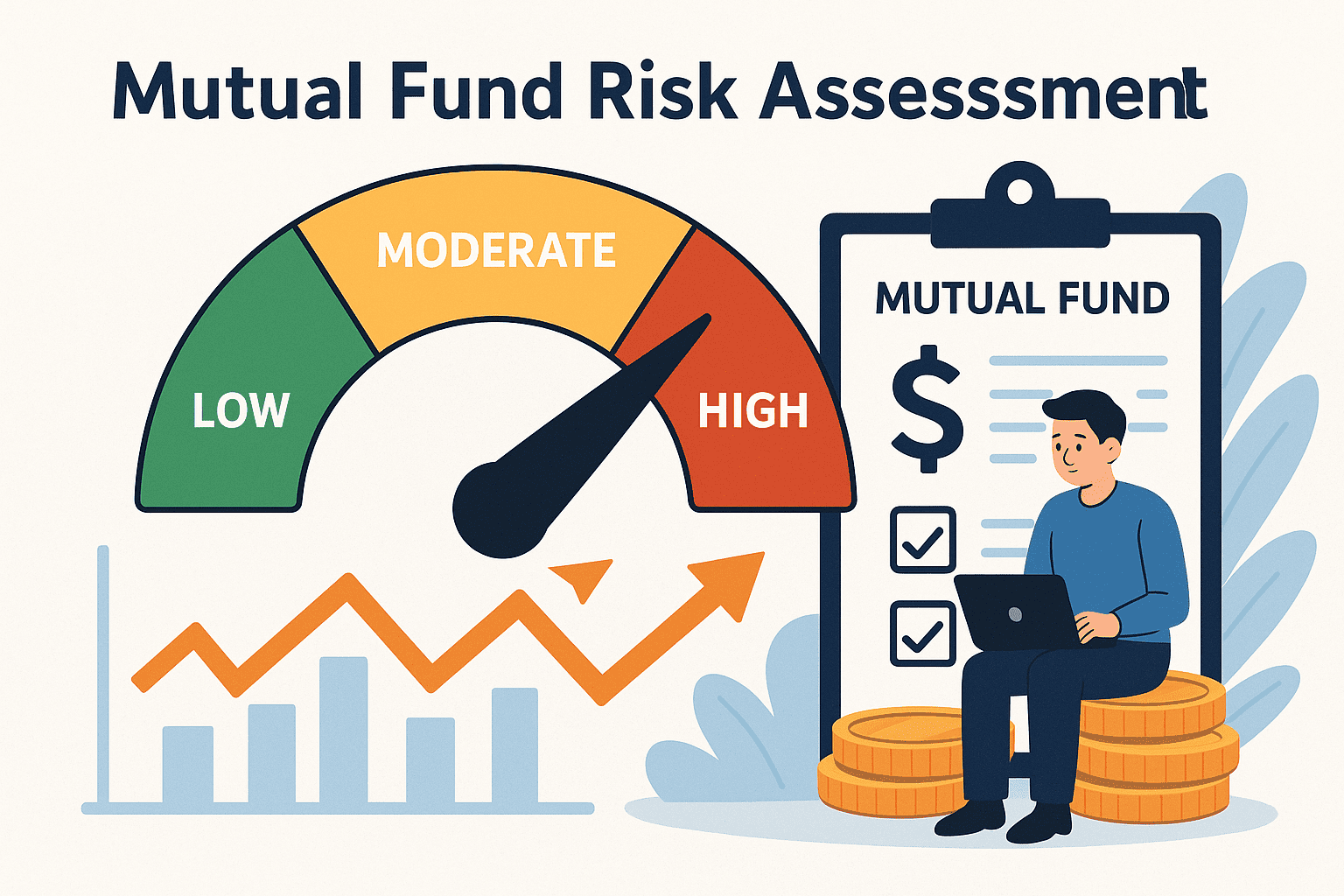
On their website and information sheets, Indian mutual funds show a “RiskOMeter.” It spans from extremely low to rather high. Use it to get a quick idea of how aggressive the fund is.

✔️ Evaluate the composition of the portfolio

Consider what the fund is investing in—big-cap stocks, mid-caps, government bonds, or corporate debt? This will provide you with insights on its possible volatility..

✔️ Look at the Past Activity of the Fund

Although past performance does not ensure future returns, it can show you the fund’s response in market swings.

Match Your Investment Profile with Risk Profile.

The following is a brief overview:

  1. Low risk tolerance: Look at debt funds or liquid funds.
  2. If you have moderate risk tolerance, consider investments that are balanced or hybrid.
  3. Highly risk tolerance: Consider equity or small/midcap funds.
  4. Deciding your risk tolerance depends on your age, financial objectives, and income stability.